


As the hart panteth after the water brooks, so panteth my soul after thee, O God. | Psalm 42:1
On the far side of the world a fern grows to the size of a tree1. The dark trunk comes up slender under a ferny crown that shoots forty feet in the air. Every new frond is born coiled and green. It sits still until spring. The first kiwi naturalists in Aotearoa kept a trick involving its smaller cousin, the silver fern2, whose underside is paler. A man walking out of the dense bush at dusk would turn the fronds of the silver fern over as he went, pale side up, so the trail behind him glowed the way home in light.
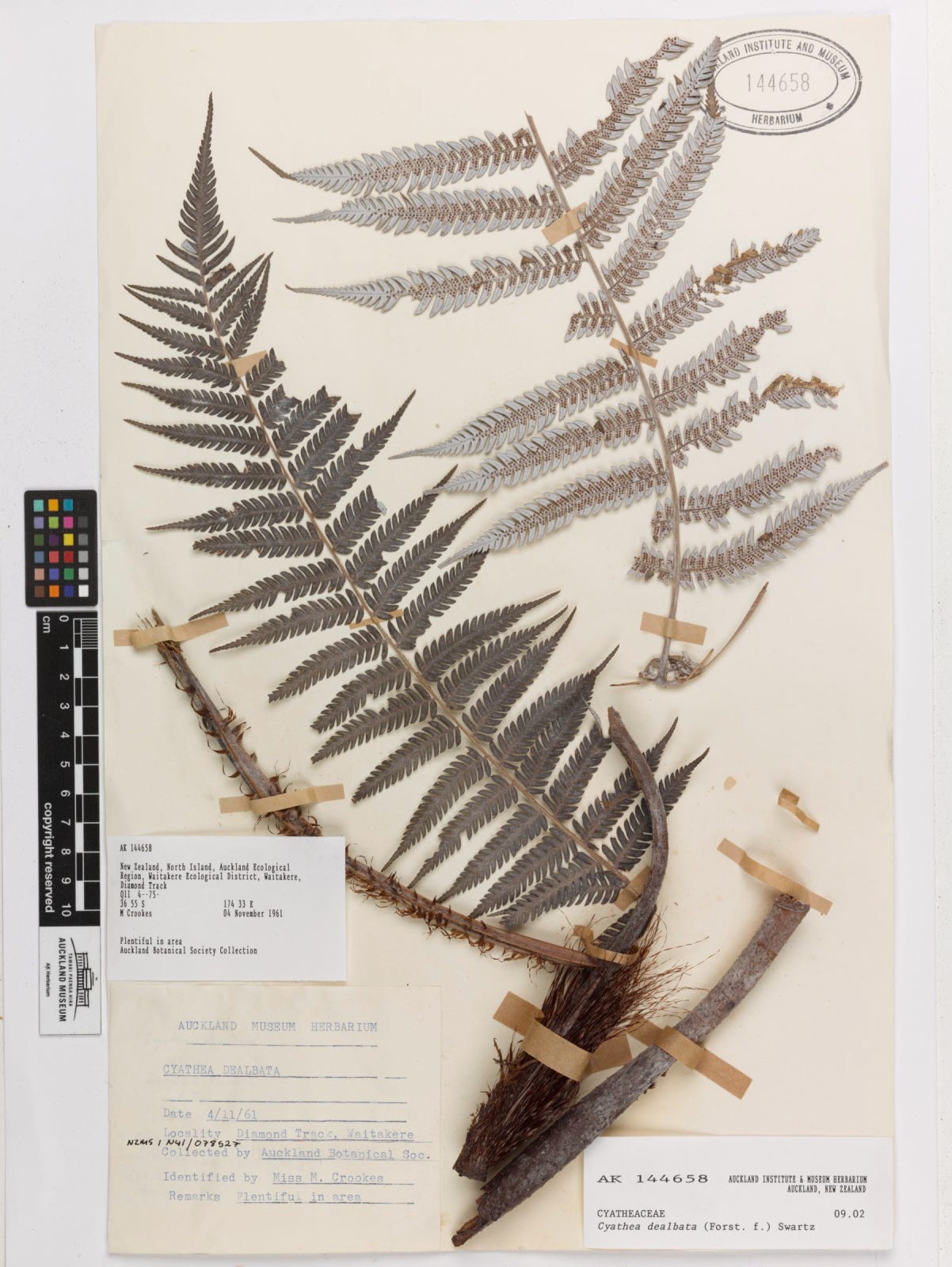
There is no question that New Zealand has some of the world most primordial and dramatic landscapes. On the west coast of the South Island, the Franz Joseph glacier comes down out of the alps so far that the ice nearly reaches those tree ferns, two distinct austral worlds with no usual business touching, touching. An extreme natural juxtaposition. What the ice grinds off the mountains washes into the lakes and rivers and turns them a blue by way of grounded-up glacial milkdust. East of the divide the rivers drain clear, and brown trout3 hold in their gin clear pools, hazel-flanked and freckled, a fish you must hunt by sight. You see the trout before it sees you or there is simply no cast. If you dare flinch or make any noise, the pool empties. I have learned to love freckles. I have also flinched at things in my time, and I know something of pools suddenly made empty.
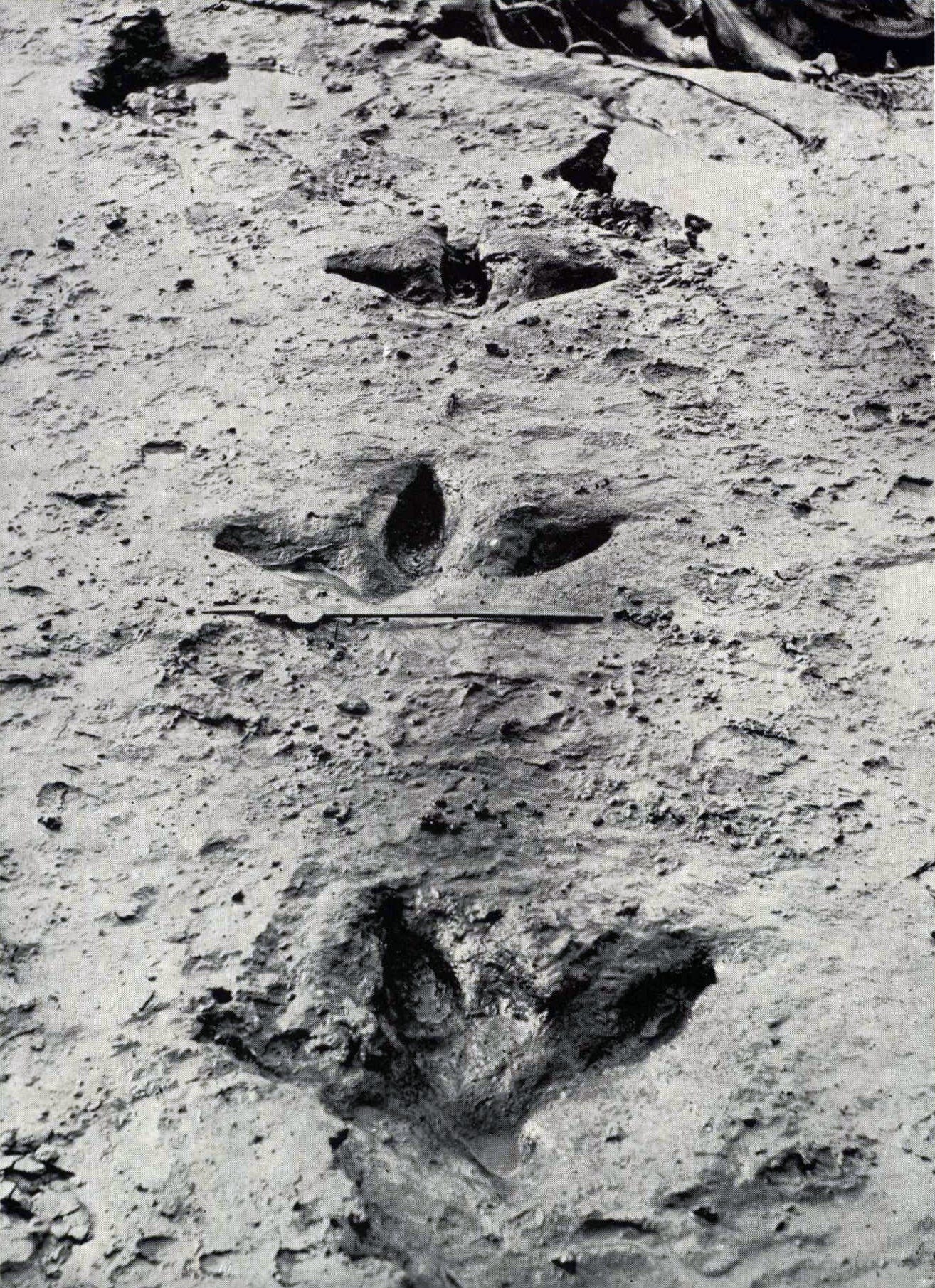
It is then no wonder Peter Jackson found Middle-Earth there. On the North Island, you will find boreal mountains too. But it is better known as green country where the rolling hills, sheep farms, and small shires dot the land with literal milk and honey. Deep in the rain-soaked north bush, men once found the gigantic footprints of the moa4, a primordial bird that no longer exists anywhere under the sun. The moa was hunted into extinction by the arriving Polynesians, long before anyone thought to write about them. Its prints were laid when the mud was soft, and the mud hardened and kept them, and they are perfect. You can count the toes. Soft ground will always keep what touches it.
I then, should confess after all these vivid descriptions, that I have never actually been to New Zealand. I have left the continent of North America exactly once, this past spring, for a brief journey through emerald Ireland. So, nothing of what you have read so far comes from my own memory. I have never stood beneath the black trunk of the tree fern, never seen the blue glacial water with my own eyes, never knelt beside a moa’s footprint or cast a fly above a brown trout suspended in clear water. I built a whole imagination of that land out of longing, and it happened during a golden Georgia summer when I was fifteen years old.
My childhood home had begun coming apart earlier that winter. It announced its abrupt end that spring by way of a nasty divorce. Immediately my bewildered father went reaching after whoever he had been before any of us. My mother in guilt and shame moved into a rental by a carpet mill and left for work at five in the morning. Each morning I laid in the dark listening to her old Ford Expedition cough itself awake to go make a living. Nobody asked me anything about it, then or since. I thought I had handled it, and I told that story for years and told it Well, because I never cried and never made trouble. Deep down I truly felt sorry for both of them, which in hindsight spared me from having to notice that nobody was looking at me.
It took until my late twenties to work out what I had lost that spring, to understand what story I had internalized. Perhaps every boy carries one question silently, and he does not know he is asking it: Am I worth watching? Am I worth delighting in? Somewhere in there a man stops looking at his son with pleasure. So, the son goes on playing, and nobody says anything, and the boy doesn’t conclude that his father is in bitter pain and instead looks inwardly at his condition and concludes something else about himself. In time, the question goes underground in the caverns of the heart where he cannot get at it.
That was the ground of the soft earth that year, and it had been raining all spring. Then, in June, someone crossed it. She was a schoolmate I had known of since at least first grade, one of those liminal figures who exist for years in the blurry margins of your childhood memory. I recall that she had moved to New Zealand at one point, and I remembered that she had come back to our hometown last year. It was a summer afternoon then, at the local park where I remember seeing her in the distance with her mother through the old park oaks. I remember immediately speaking something like a prayer to myself, though it was scarcely that. I whispered asking God only that I might get to speak with her. It was an inwardly request and almost without any courage. But somehow by dark she had found me. In that ephemeral summer friendship, she mentioned New Zealand a few times in passing, and since she had been there, that was enough to make it Eden for me. I was the son of people who had crossed one border and settled in Georgia, and the world I knew then ran from Calhoun to the county line and back. Then there was her, of whom I thought was beautiful and mysterious, who had lived on the far side of the planet and come back, and now she walked the same roads I did. I tell you that I could not think of anything else that summer.
And I could not have told you what had happened, only that everything had gained a color it did not have in May, and I did not want the color to go. The heat in my heart lasted all night that summer. I layed in it half awake, and the fan in my room turned, and every song on the radio became a song to a muse, addressed to her or me, timed to arrive. My boyhood imagination now had a coastline I which I sailed along every day, but I never once landed on. The future of my life became both a vague and certain promised land. I got up early before light for it. Even my athletic training itself seemed ritualistic, an oblation offered to the coming life. It was as if by submitting my body to effort I might make myself equal to the world that had just revealed itself. It seemed then that the whole of the earth had awakened for a boy that was standing astonished, frightened, and unprepared. A boy who had discovered that reality was perhaps, not silent after all, that I was being spoked to in the secret language of his own desire.
For years, I’ve tried to explain this feeling to myself. Nobody told me what it was, not my nominal Catholic upbringing, not my father, not my mother, certainly not in a house that had just come apart. There was no one whose job it was to say: this thing you are feeling is real, and it is enormous, but it is not what you think it is. So, at fifteen I knew only that a god had come. Ecce deus fortior me, qui veniens dominabitur mihi. Behold, a god stronger than I, who comes to rule over me. Dante Alighieri was nine when that sentence came to him, I unfortunately had no Latin and considerably less theology. So, I did what any boy would do, I knelt, and for years resisting never once occurred to me as a possibility. For who resists when beauty first speaks his name?
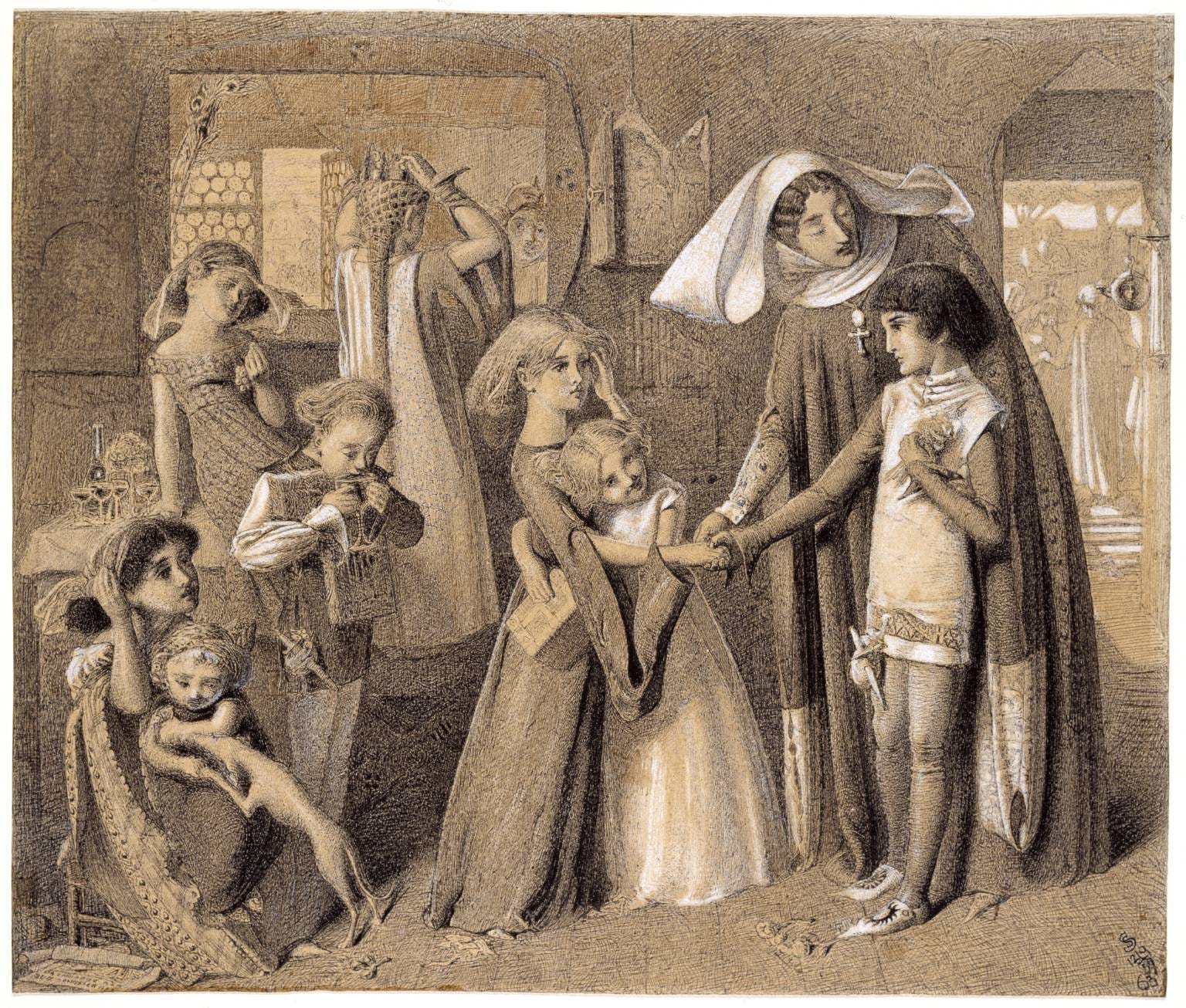
The feeling still returns to me faintly, a few nights a year. With no particular season to them. I dream a gold Georgia summer dusk, lanterns caught in the leaves and a winding path my feet know without being told, and company on the path, a summer’s worth of youth given a face. I wake from those dreams the way a dry field wakes from rain, alive with viriditas, wanting to build something and be worth something by nightfall. That is the shape of it, and the shape has not changed in fifteen years. It is the light on green hills at the end of a day, most beautiful in the last golden hour, when it is already fading. The longing is mine to the last coal.
There is the typical method for categorizing one of the most illuminating hours of a boy's life into a hormonal event, and believe me, I was utterly embarrassed for years by that analysis. But the people who talk that way are always so pleased with themselves at such materialist prognosis. Our eyes can be described as wet instruments for the capture of light, and the description is accurate, but it will never tell you why the light is beautiful. I believe what had visited me that summer was Eros, though I have needed fifteen years to learn that this was the meaning of the visitation. Eros is the child of poverty and creativity, born empty-handed yet endlessly inventive, forever seeking in each beautiful thing the beauty that no single thing can contain. A desire which alights upon a face, a body, a country, a song, but it does not end there. It presses through and beyond the veil, and behind every beloved form, the heart suspects a homeland which ignites a homesickness in form of longing. We have diminished the word until it signifies little more than appetite.
The god that visited me that summer, then, was real. Something did enter my life with force and I was not wrong to fall before it. The heart may fasten itself to beautiful things l and still ask of it what only the eternal can give. Thus, its restlessness is not proof that it has desired falsely, but that it has mistaken a sign for the infinite. The proof lies in the direction of the longing. In my life I have turned it toward a hazel-eyed girl, a faraway country, a blue river, a silver fern. Each I received for a time, each consoling me. Though all proved too small for the whole of what we were made for. Lord I thank you for my pierced heart, for through that wound floweth my desire for beautiful things.
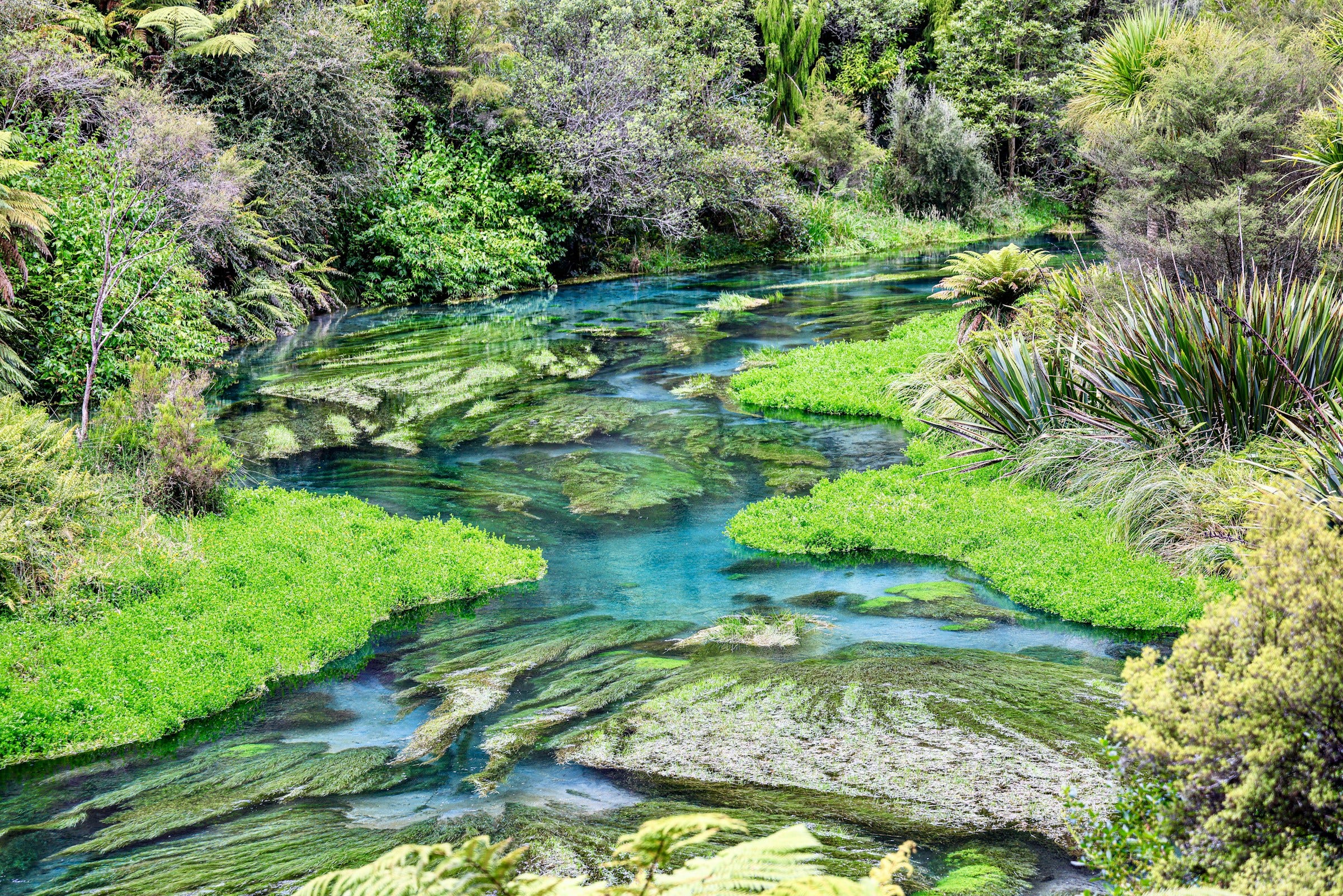
While I have never seen the tree ferns, God willing, I will see them one day. That is not what this was about though. My daughter is one year old. Her hair came in light the way mine did and has already begun to darken, which means she will not remember having been fair, and someone will have to tell her. She is not old enough to hold her breath and go snorkeling with me in Holly Creek yet. So she sits in the pebbled shallows with my wife, a beautiful woman who came up out of the same red clay I did. My daughter Isabella screams with laughter when the cold spring fed creek water hits her toes, and that is the eschaton for me. The light in the underside of silver fern is borrowed. For its glow is only ever enough to show a man the next few feet of the way home. That is probably merciful for a man who might otherwise see the whole road and stop walking it and only admire it instead—I know my naturalist soul would. So, I will keep turning those ferns over and enjoying my cold creek with my wife in the shallows. My daughter will not know about that summer but she will be shaped by it anyway, the way soft ground always is.
Dicksonia squarrosa
Alsophila dealbata
Salmo trutta
Dinornis novaezealandiae
I knew from my own boyhood on clay that from certain points in Georgia, one can see the *parousia*, the homeland of the heart's desire. I didn't know that anyone else had seen quite that vision. Thank you for writing this, brother.
The summer is ending now (and the moonlight jellies are passing away into the great unknown) and the season's change always brings these kind of Edenic thoughts to me, too.
Pity Thy creature, O Master,
And make me again again a citizen of Paradise.
This is one of the most beautiful essays I have read in a long while. Many comments keep using this word beauty. A word like a worn coin only still, well, beautiful. Sero te amavi, pulchritudo tam antiqua et tam nova, sero te amavi